
Are New Jersey Arrest Records Public?
Plenty of New Jersey arrest information is available on request. That does not throw every file open. A jail roster and an investigative file face different rules. So do a juvenile entry and a booking photograph. The record type and its governing law decide what you receive.
The Open Public Records Act, known as OPRA, anchors the state's access rules. It presumes disclosure. Exemptions still apply. Under the statute, arrest information must be released as soon as practicable. The deadline is 24 hours in the circumstances it specifies. A custodian may withhold or redact material when release would damage an investigation. Protected details and other laws can also justify withholding.
Two more measures shape the picture. Executive Order 69 limits ordinary OPRA access to certain criminal-investigation images. New Jersey's anti-extortion statute targets payment-for-silence arrangements. That law does not make arrest information private. Nor does it force a publisher to delete accurate coverage of an arrest. A public roster can also sit narrower than the file a police department keeps. A court record may later be sealed or expunged.
Booking reflects an arrest, nothing more. What happens next belongs to the court, and the record itself stays a separate thing from the outcome.
New Jersey OPRA Arrest Record Rules
OPRA, N.J.S.A. 47:1A-1 et seq., starts from a policy of public access. Exceptions follow. N.J.S.A. 47:1A-3 governs law-enforcement records. It names the basic arrest information an agency must release as soon as practicable and within 24 hours where the statute applies. The required facts run wide. They include the arrested person's name and listed background details, the complaining party, the charge unless sealed, the arresting agency and its personnel, the investigation's length, and the immediate circumstances of the arrest.
Response timing is its own rule. A custodian must answer as soon as possible and no later than seven business days when the record is on hand rather than in storage or archives. Clarification requests and archived files change the timeline. Describe the record well. Agency, date range, complaint number, and document type all help the custodian find it.
The Government Records Council's OPRA text holds the law and its current amendments. It also lays out exemptions and response duties. Paper copies follow a statutory per-page fee schedule. Electronic records generally carry no per-page charge. Extraordinary requests or special formats can trigger a service charge, so confirm current fees with the custodian first.
The official OPRA page gives the statewide framework only. It is not a request portal for every county sheriff or municipal police department. Each request still goes to the correct records custodian. That keeps an arrest record request on the right desk.
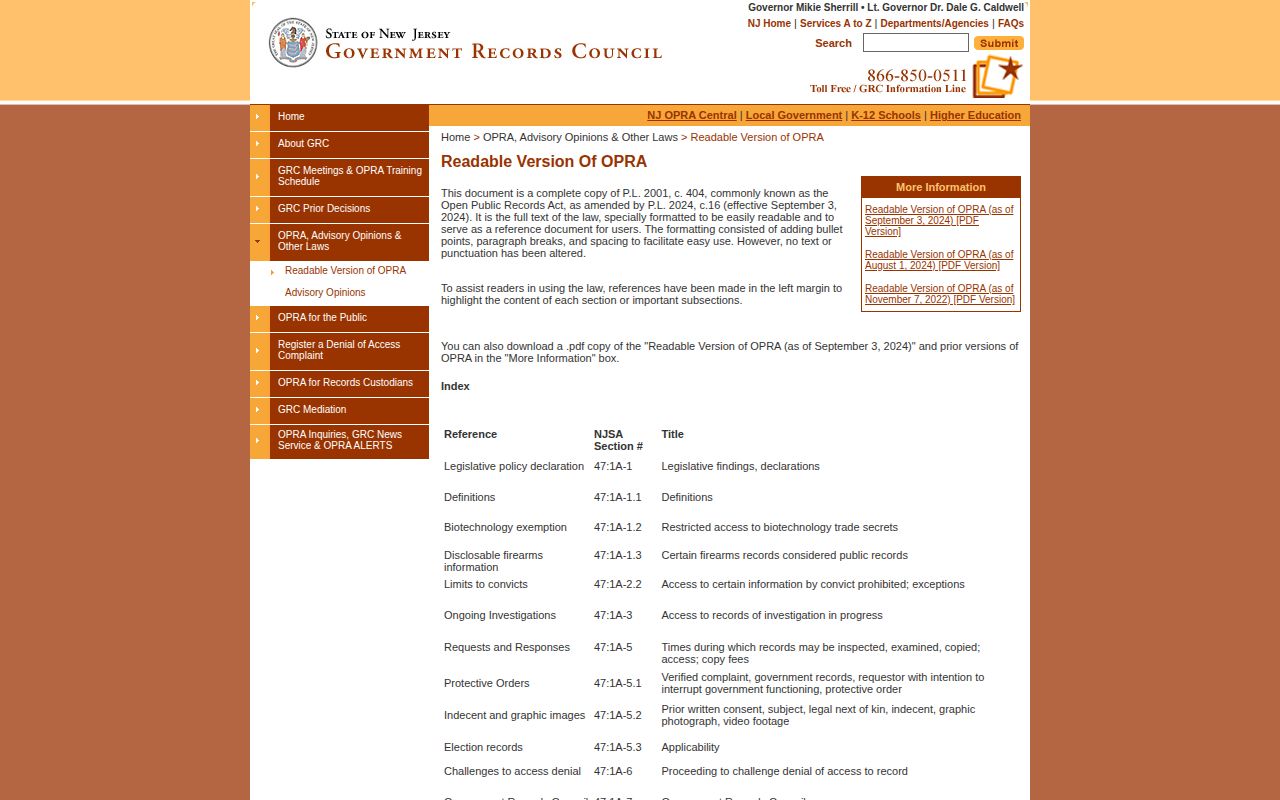
A clear OPRA request names one defined arrest record so the custodian can apply any lawful redaction or exemption.
Note: A response deadline does not guarantee full disclosure; a custodian may still apply an exemption to part of a record.
Why New Jersey Mugshot Access Differs
Executive Order 69 states the rule plainly. Fingerprints, license plates, photographs, and similar criminal-investigation records kept by state or local agencies are not public records for routine OPRA inspection or copying. The order still preserves basic arrest information. A county may post an inmate photo. An agency may release a booking image under a particular rule or case. Neither practice grants a statewide right to every mugshot.
That gap shows up online. A result shows a name and charge, no image. The photo may not exist. It may sit outside that portal, or the order may bar its release. Ask for the photograph as its own item. The custodian can then explain whether the image exists and whether a legal basis permits release.
The official Executive Order 69 text is the state's published guidance on police records and photographs. It keeps investigative images and fingerprints separate from the basic-arrest-information rule.
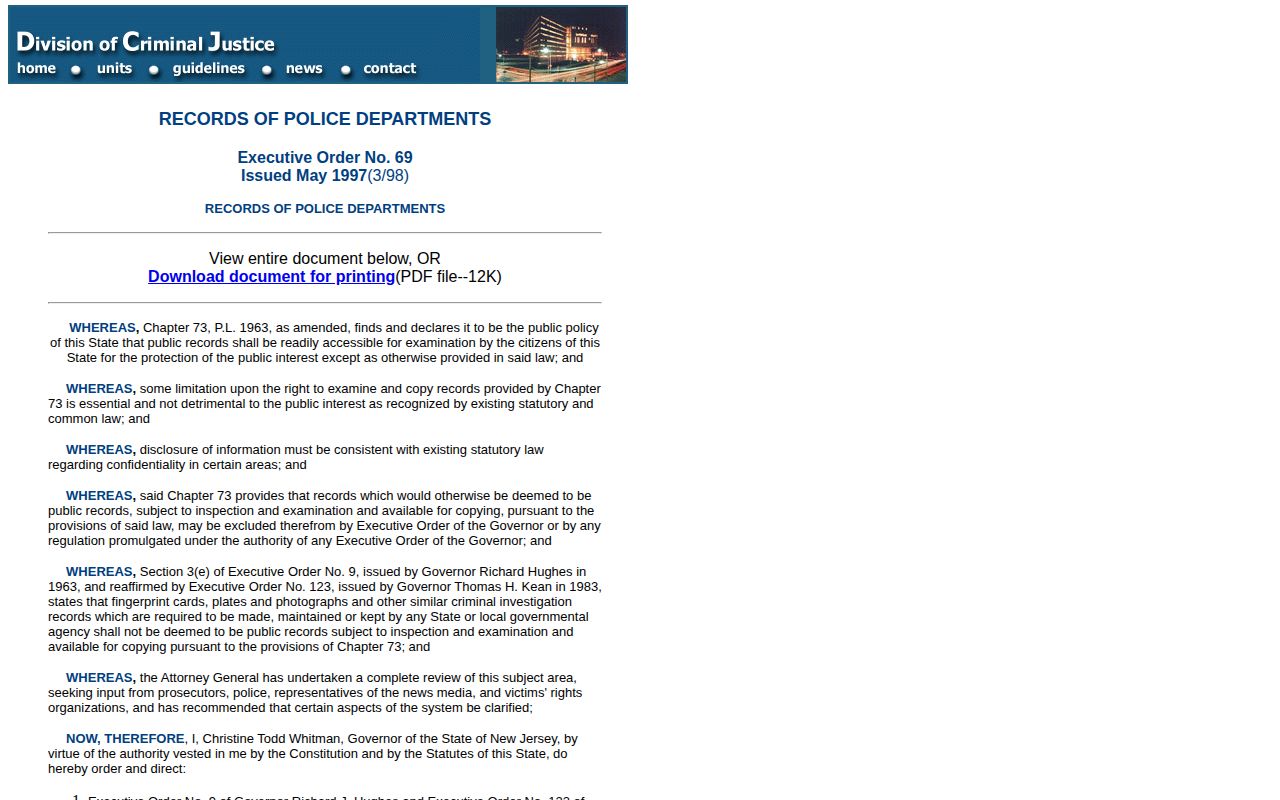
Photo access in New Jersey depends on where you ask. Practices differ county to county, so no single rule covers every booking photo.
Essex and Ocean interfaces show profile-image behavior for some entries. Salem and Union can expose image fields. Bergen's secondary index says no mugshot images are provided. Atlantic, Camden, Cumberland, Gloucester, Hudson, and Mercer post no countywide photo policy. So do Morris, Somerset, Sussex, and Warren. A missing policy does not mean every image is withheld. Ask about the specific image. The records custodian, not another county's display habit, is the right source. The statewide mugshot and photo landscape compares those official practices with secondary pages.
Juvenile records follow a stricter rule. N.J.S.A. 2A:4A-60 keeps juvenile court, probation, and law-enforcement records confidential. Access goes only to listed people and agencies. A narrow warrant exception permits identification needed to execute a warrant. It does not create a routine public booking list. A secondary photo page cannot tell you whether a juvenile identity may lawfully be published.
Note: An image visible on one county’s roster describes that portal’s practice, not an OPRA rule for every New Jersey county.
What New Jersey’s Mugshot Statute Bans
The Legislature passed P.L. 2017, c.123 on July 21, 2017. It took effect immediately. The act added N.J.S.A. 2A:58D-3 and -4 to Title 2A. Lawmakers weighed public access and free-speech interests. They also targeted a shakedown trade. Some outlets threatened to post arrest information unless a person paid to hide it. The statute draws a narrow line against that coercion. It is not a general ban on reporting arrests.
N.J.S.A. 2A:58D-4 forbids demanding or accepting a benefit. The silence must cover information identifying someone as arrested, charged, prosecuted, or convicted. Criminal-history records count. So does any photograph taken at arrest. Disclosure means publication and other communication, including online release. Whoever took the payment is then barred from disclosing the material. Free records requests are different. So are corrections and court-order requests.
The law allows a civil suit in Superior Court. Liquidated damages run from $1,000 for solicitation conduct. Disclosure after the prohibited exchange carries a $10,000 minimum. Actual and punitive damages, attorney fees, costs, and equitable relief may also be awarded. Civil penalties add at least $500 per solicitation act. Each disclosure act draws at least $1,000. Check the enacted text before making a claim.
The enacted New Jersey law is the source for the definitions, scope, damages, penalties, and effective date. No published New Jersey appellate decision construes the elements of N.J.S.A. 2A:58D-4. That gap is not proof of anything. Trial-level or federal cases may exist.
New Jersey Juvenile and Withheld Records
Juvenile confidentiality is one reason a statewide search cannot promise a complete name list. The statute opens juvenile files to specified courts, prosecutors, counsel, parents or guardians, and agencies. Some details may surface at charging or disposition under defined conditions. Restricted access is still the general rule. A public exception exists for a serious adult-equivalent offense. It hinges on the statute and the court's harm analysis.
Other records stay closed for different reasons. An active investigation can justify withholding. So can a sealed charge. So can a protected victim or witness. A safety concern, another statute, or a court order can also justify withholding. Identifiers, protected addresses, medical facts, and juvenile details may be redacted even when the rest of the arrest record comes out. A search miss has many causes. The record may be restricted, the person released, the spelling wrong, or the agency different. It never proves no arrest happened.
Confidentiality is not the same as sealing. The juvenile-record statute and the New Jersey Courts' public juvenile confidentiality explanation draw that distinction. Some final court orders may be public even while related juvenile records stay restricted.
New Jersey Arrest Dismissal and Expungement
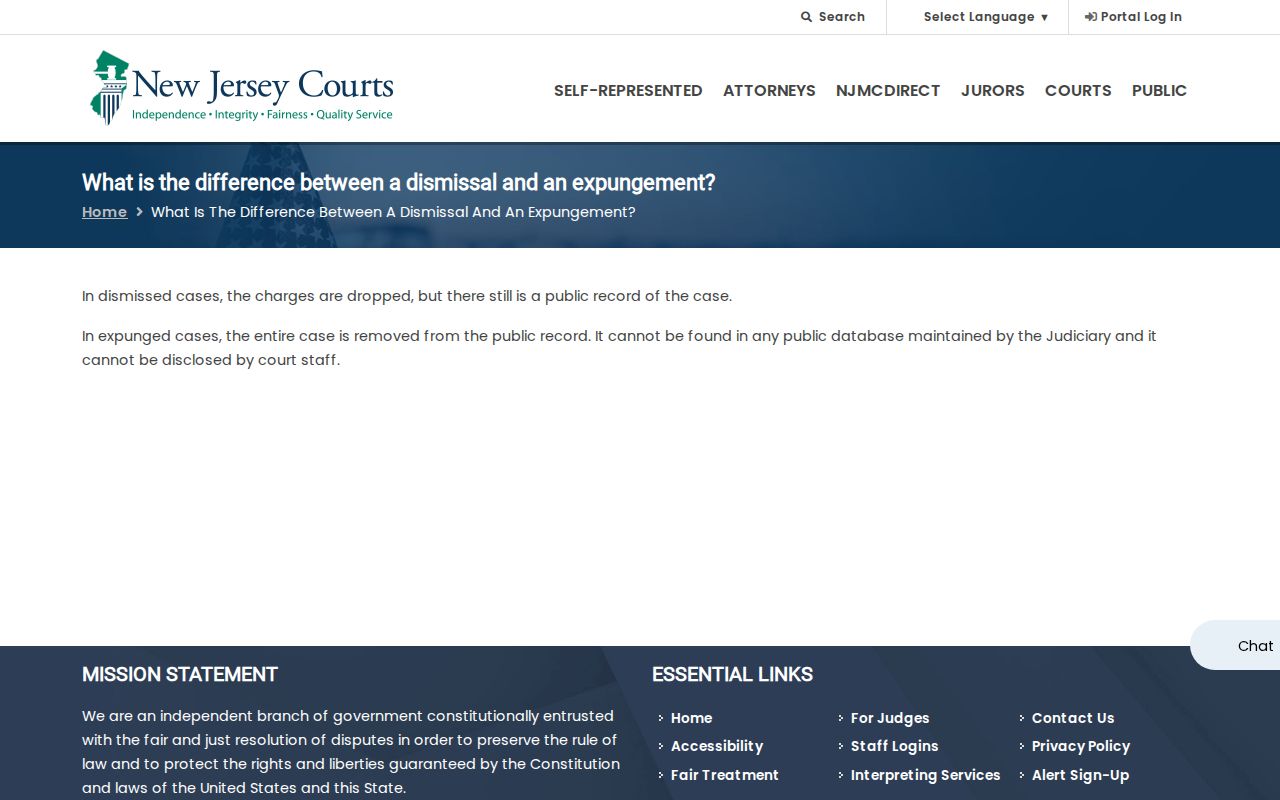
A dismissal and an expungement are different events. A dismissed charge can linger in the public court record. Expungement is a court process. It can remove eligible records from public systems, subject to exceptions and authorized uses. The New Jersey Courts explain that an expungement may cover complaints, warrants, arrests, commitments, processing records, fingerprints, photographs, index cards, rap sheets, and court docket entries. Eligibility turns on the charge, the outcome, and a judge’s order.
Waiting periods vary by case type. Many conviction records run ten years, counted from whichever comes last: the most recent conviction, payment of court-ordered financial assessments, or completion of probation, parole, or release. Disorderly-persons and petty-disorderly-persons matters often use five years, with a possible three-year compelling-circumstances route. Some indictable crimes use ten years, with a possible four-year compelling-circumstances route. Clean-slate relief has its own ten-year rule and limits. Arrests without a conviction follow a separate path. So do juvenile cases.
The current New Jersey Courts expungement kit and dismissal-versus-expungement FAQ lay out the steps and the limits. These are general points only. A judge’s order decides actual eligibility. That same order controls what agencies may still disclose.
Does a dismissal remove an arrest from the public court record? No. A dismissal and an expungement remain separate events, and an eligible record needs a court order before expungement protections apply. A later search-engine update is yet another separate step.
The Courts’ explanation puts the public court database and a later expungement in plain terms without promising that every site or search engine updates at once. Updates happen on each site’s own schedule.
Keep a copy of the order. Give it to every agency that holds the record. New Jersey’s clean-slate framework is codified at N.J.S.A. 2C:52-5.3. A dismissal alone does not trigger the same public-record effect. Once a court grants expungement, the statute controls how the arrest record is handled and who may still access it under an exception.
Note: The court order and current kit control; general waiting periods only help identify which eligibility rules to review.
Free Corrections for New Jersey Arrest Pages
A lawful update starts with the record holder. Is the name, charge, or disposition wrong? Send the official correction or court order to the police agency, jail, court, or publisher that controls that entry. A person can also ask an agency to fix an error or honor an expungement order. Each agency and publisher sets its own review process. A free request is not a promise that accurate reporting will be removed.
| Route | Published approach | What it can do |
|---|---|---|
| Government custodian | Send an OPRA request or court order to the agency that holds the record. | Seek access, correction, or action required by the order; exemptions still apply. |
| Court expungement | Use the New Jersey Courts kit and obtain an order if the case is eligible. | Changes agency and court disclosure duties under the order and statutory exceptions. |
| Search engine | After the source changes, use the engine’s outdated-content request route. | May refresh a stale result; does not erase the source record. |
| Busted Newspaper | Free listing-correction request with the item URL and supporting legal paperwork. | Publisher review for qualifying records; no outcome is guaranteed. |
| RecentlyBooked | No-charge removal, suppression, or modification policy for listed circumstances. | Can correct the publisher’s entry; a search result or court record may remain elsewhere. |
| Mugshots.com | The New Jersey page describes a free route for qualifying expunged records. | Publisher policy claim only; its stated response target is not a court deadline. |
| Mugshots.zone | Listing review route for expunged, sealed, dismissed, or otherwise eligible cases. | Requests documents and review; it is not a court process. |
| News publishers | Patch, TAPinto, and NJ.com / Advance publish free request routes. | Attach official records; editorial discretion and review times differ. |
A demand for money is not a correction request. Silence-for-payment offers work differently. Never pay someone to suppress a record. Preserve the message instead. Then seek legal advice or contact an appropriate law-enforcement office about suspected coercion. The statute does not bar a genuine correction process, and a publisher’s free policy is no substitute for an expungement order.
For a news example, NJ.com / Advance Media’s request form accepts categories for a name, article, photograph, or video and asks for relevant records. That form is a free review path, not a promise to remove accurate reporting.
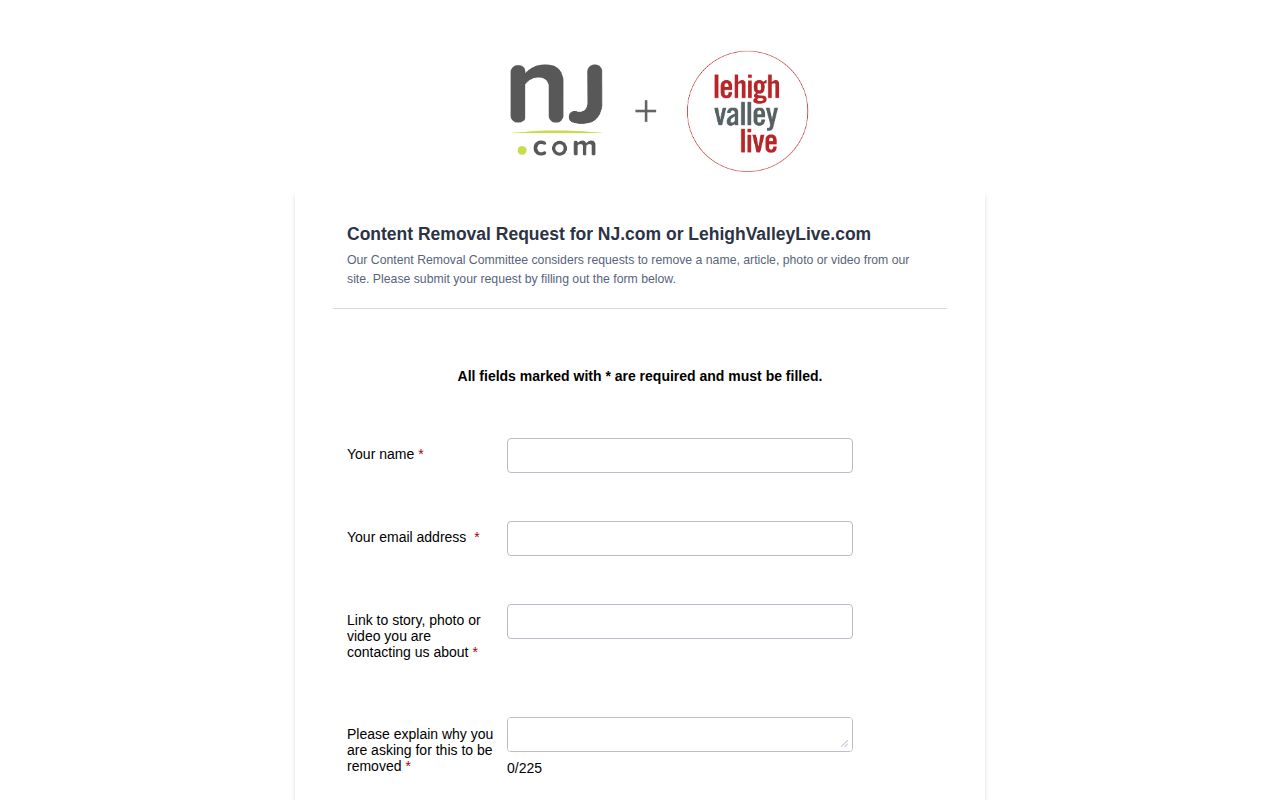
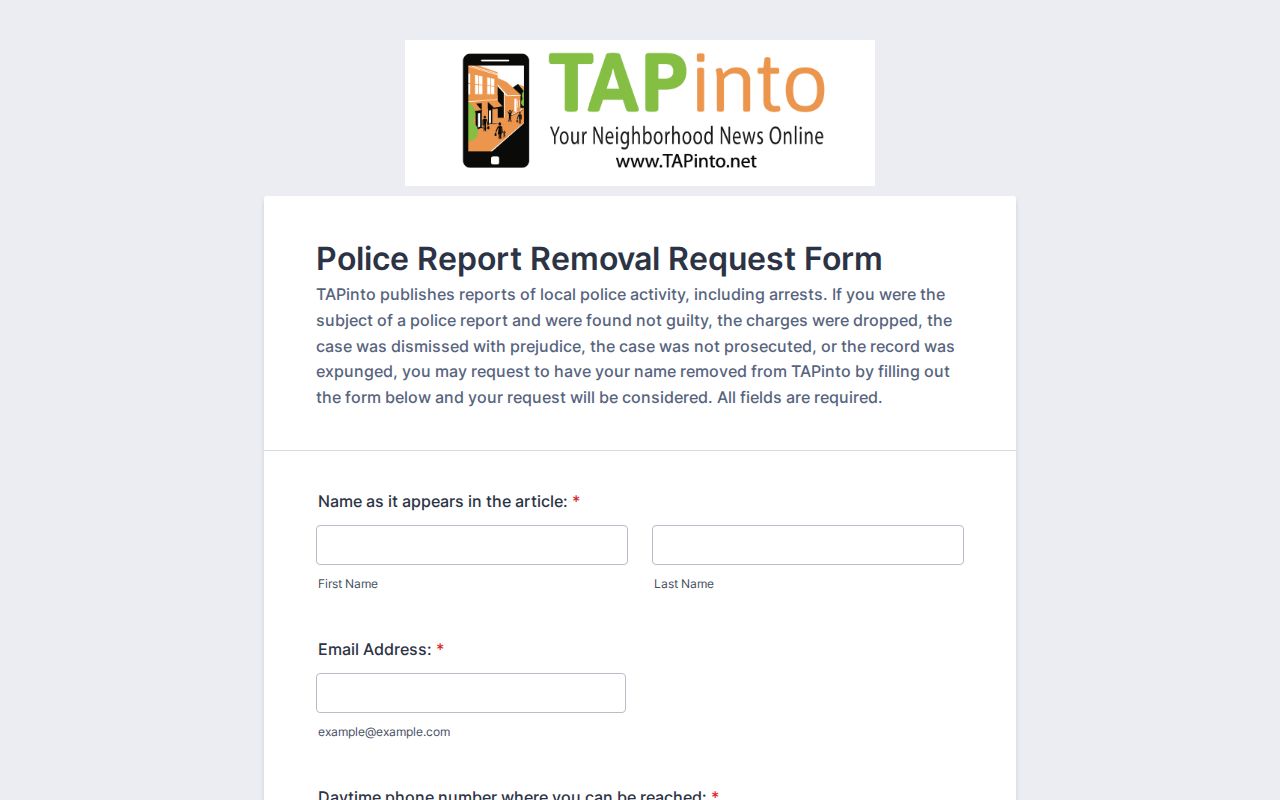
The form supports a documented review request, while the official record and its court outcome still govern the underlying case. TAPinto’s police-report request form offers a free review route. It asks for outcome documents, and its review window can run up to four weeks with editorial discretion retained.
Before sending records, confirm the publisher’s current instructions and share only the documents the request actually needs.
Note: Publisher review periods describe that outlet’s process and never replace a court order or an agency correction.
New Jersey Arrest Search Results Over Time
Fixing the source page and refreshing a search result are separate steps. An official page can change. A search engine may still show a stale snippet or cached title for a while. Google’s outdated-content guidance offers a request path for eligible pages. A refreshed result does not erase a government record, reverse a court case, or force a publisher to drop accurate news.
Work in order. Get the court order or corrected record first. Send it to the source custodian or publisher next. Then request a refresh if the result is stale. Keep the date and proof of each request. A record still online despite an expungement order calls for counsel or the court, not an informal promise from an unrelated service.
New Jersey Arrest Records and Retention
Retention rules govern how long the government keeps a record. They say nothing about how long a web page stays up. The New Jersey Treasury jail schedule sets the term. A daily blotter or inmate-movement working file must sit for three years at minimum before destruction. Photo-card and inmate-history identification files follow a longer path. The period is commonly ten years from disposition or release. The jail commitment register is permanent. Booking records, court slips, bail papers, custody logs, and transport forms each get their own schedule entry. So do discharge documents and incident reports.
Older county arrest material is another matter. Ask the county clerk or records officer who actually holds the record. The New Jersey State Archives search and its finding aids reach historical collections. Those collections include correctional records. There is no statewide digitized set of modern county booking photos. An archive is not a routine source for current arrest photos, either. You can file a preservation request. A lawful basis must exist. Just remember that a retention schedule does not by itself guarantee disclosure to the public.
Note: A retention schedule governs the agency file and does not promise how long an online roster or article remains visible.
What the 2025 Jersey City Case Clarified
The States Newsroom Inc. v. City of Jersey City decision came down on August 4, 2025. The New Jersey Supreme Court faced a request tied to an expunged criminal matter and a related internal-affairs report. Its holding was firm. The expungement statute and the expungement order barred release of information about the expunged arrest, conviction, and disposition. Criminal details inside the adjacent internal-affairs file had to be redacted first. Only then could the rest be weighed under the common-law balancing test.
The ruling did not directly address the anti-pay-to-remove statute. Its practical point is narrower. "Public record" is not one status that covers every document tied to a single incident. A court docket, a police report, a booking photo, and an internal-affairs file can all answer to different rules. Read the order closely. Identify the exact record before you request it or ask a publisher to update a report.
The Supreme Court opinion carries the controlling discussion. Statewide, the lesson is to separate an expunged criminal record from nearby material. That nearby material may need redaction and its own access review.
Need a State Police arrest report or booking photo? Use the NJSP records route on the New Jersey State Police arrests page. The agency form and OPRA rules answer different requests.