
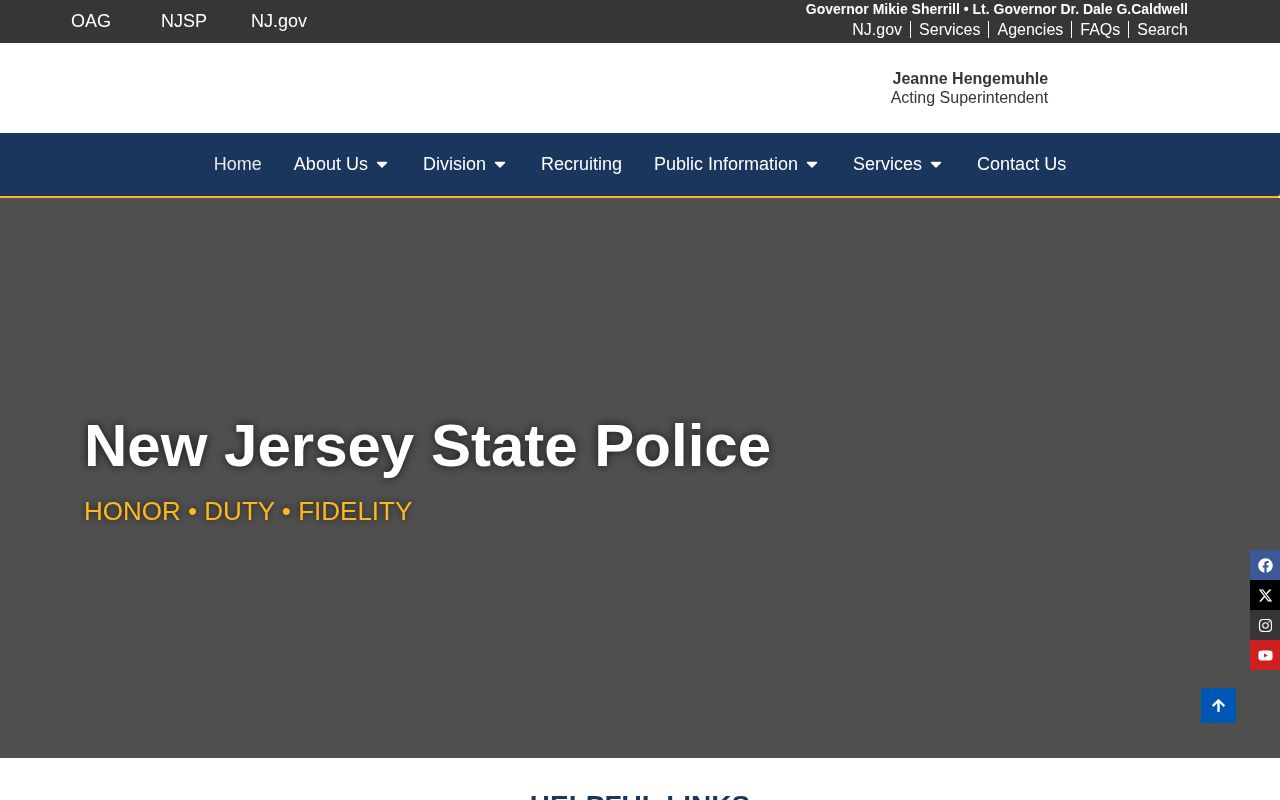
New Jersey State Police Arrest News
The New Jersey State Police, or NJSP, is the arresting agency here. Its press releases announce selected arrests and major investigations. They are not a booking index. Some stops end with a summons instead of jail. Others lead to a hold at a county facility. The agency that makes the arrest is not always the agency that keeps the person.
The NJSP home and news entry point is the steadiest statewide outlet for State Police announcements. The Attorney General also maintains an OAG news-release archive covering enforcement and investigation notices. A release may name the county facility where someone was lodged, but it will not confirm current custody or how a case ended.
Read each arrest release with care. Initial charges can change. Courts, not press releases, settle the outcome.
Four NJSP Troop Commands
Field operations split into four NJSP troop commands. That structure helps you place a regional or roadway command named in an arrest announcement, though it is not a jail list or a statewide arrest search. The official Field Operations page names each command, and the Road Stations page lists the stations.
| Command | Area described by NJSP |
|---|---|
| Troop A | Southern New Jersey |
| Troop B | Northern New Jersey |
| Troop C | Central New Jersey |
| Troop D | New Jersey Turnpike and Garden State Parkway command |
A troop label points to a command, not a jail. It will not tell you where a person was booked. Check the named receiving county, or ask the arresting agency which facility took custody.
Note: A troop command can locate the State Police unit, but it does not identify the jail that received a person.
Where NJSP Arrest Information Appears
New Jersey offers several official channels, and each answers a different question. Some carry arrest news. Others hold booking records. None of them is a verified statewide daily arrest log.
| Official channel | What it can show | Limit |
|---|---|---|
| NJSP news and homepage | Selected arrests, investigations, operations, and agency announcements. | Not a complete person-by-person feed or live custody view. |
| OAG releases | Selected State Police and prosecutor announcements. | Publication is event-based, not a daily index. |
| Aggregate enforcement reports | Historical traffic-enforcement totals. | Counts are not names, booking records, or current arrests. |
| NJSP social accounts | Selected public-information posts on Facebook, X, and Instagram. | No standalone daily social arrest feed was verified; posts can be selected, delayed, corrected, or removed. |
| County corrections systems | Current booking and custody information when an arrestee is held by a county. | The receiving county’s system, not NJSP, holds that county booking record. |
NJSP and OAG releases might cover a warrant arrest. They might cover a highway-safety campaign or a major case. They work as leads. What they will not do is report every motorist a trooper stopped or arrested. NJSP publishes no searchable daily arrest or dispatch log.
The State Police homepage is the best single starting point for selected announcements. The Attorney General archive adds releases from major investigations and coordinated operations. Neither promises a fixed daily publication schedule or a complete arrest archive. A missing post may simply mean the event was never selected for release. It does not mean no arrest happened.
Official NJSP social accounts share public information too, but no separate feed posts every arrest. A post can summarize an event, appear late, or get corrected afterward. Keep the source and its date when tracing a post back to a case. Then confirm current details with the agency or the custody holder.
Where NJSP Arrestees Enter Custody
NJSP is a patrol agency, not a county jail system. An arrest can end in a summons, a release, a brief hold, a transfer, or county lodging. When someone lands in county custody, that county's system is where a current booking entry and any roster photo would appear.
To trace an NJSP arrest, follow this order:
- Search the official NJSP and OAG release channels for the event, and note the arrest date, agency, and any stated lodging county.
- If a county is named, use that county’s official corrections search. If no county is named, ask the arresting agency which facility received custody rather than guessing from the troop label.
- Check the relevant county’s latest booking view, then contact its records unit if a fresh intake is not yet listed.
- If custody is no longer at a county jail, use the official state or federal custody system that matches the reported transfer. A custody result is not a court outcome.
The New Jersey County Directory routes you to local arrest-record systems. For same-day postings, the statewide Arrests Last 24 Hours overview explains why county update windows differ. Someone sentenced to state prison belongs in the Department of Corrections search. That person does not belong on a county roster. State Police does not hold every person it arrests. An arrest notice alone does not mean the person is still in custody.
Request an NJSP Report or Photo
The Criminal Justice Records Bureau handles general NJSP records inquiries. Its records page lists the general records email plus a separate discovery contact for prosecutor matters. The agency's SP-275 form covers listed reports and photographs, including crash, unfounded-investigation, drinking-driving, operations, aircraft or boating, and accidental injury or death records. Crash records have their own online route through the New Jersey crash-report portal.
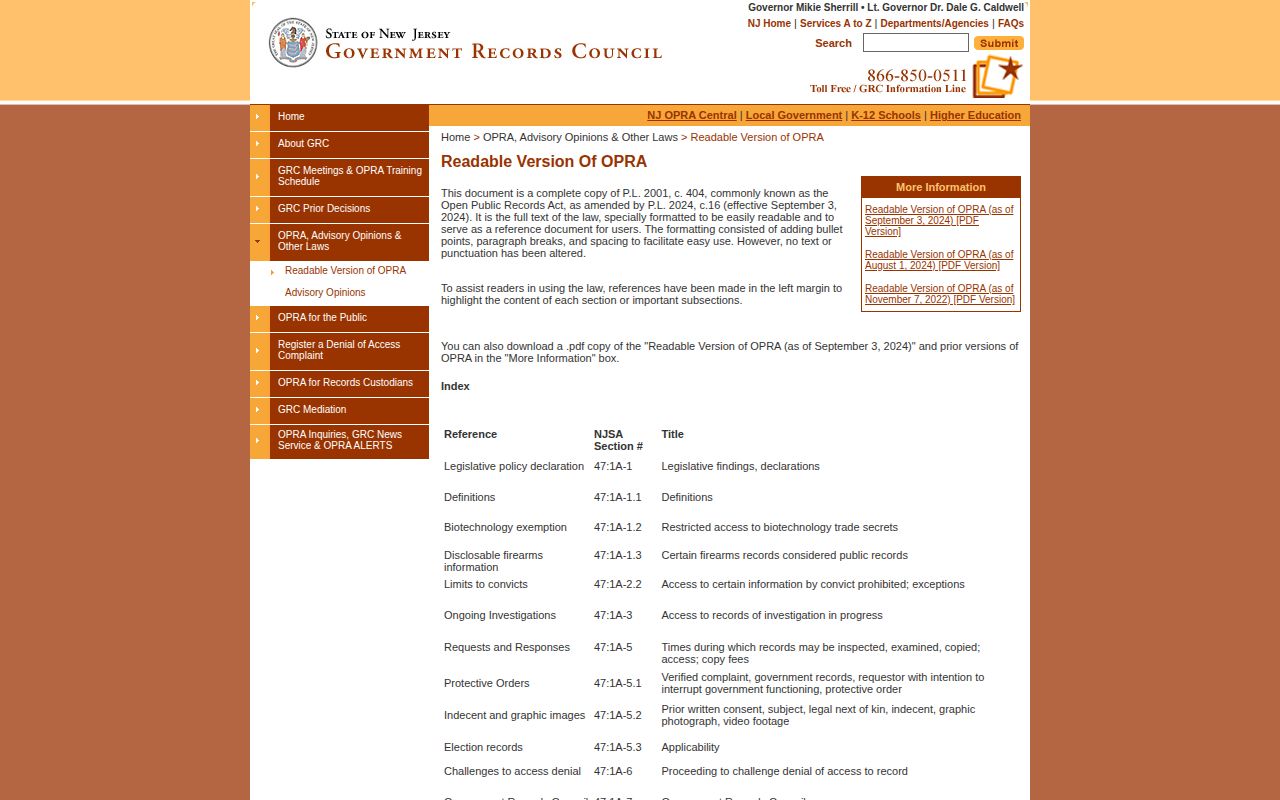
Pick the right custodian and keep the request narrow. Reports tied to prosecutor discovery do not go through the SP-275 path; the form sends those to the municipal or county prosecutor. For a general incident record, the NJSP/OAG OPRA guidance explains how to file a written request with the agency holding the record.
Start by confirming the report type and the event details. Then send the request through the route the form or the OPRA custodian requires. Fees depend on the record type:
| Request type | Published fee or timing |
|---|---|
| Reports requested on SP-275 | $10 per report, subject to the form’s terms and exceptions. |
| Uncertified non-toll crash report obtained in person | The form says no fee for that specific request; copies in this context take about two weeks. |
| First ten photographs in a requested set | $5 per photograph. |
| Each additional photograph | $3 per photograph after the first ten. |
SP-275 handles photographs by mail only. Requests go to the Criminal Justice Records Bureau. The case must be closed first. Rather than single images, NJSP releases complete sets. You cannot pick up a report at headquarters in person. Note the two-week language on the form: it belongs to the uncertified non-toll crash-report context. It is not a promised turnaround for every arrest or incident report.
Written OPRA requests work best when aimed at the right agency. Send yours to the office that actually holds the record. Identify the record as precisely as you can. State guidance calls for a response as soon as possible and no later than seven business days when the record is on hand and not in storage, subject to statutory details. Even a timely response may not mean full release.
Help the records custodian find what you need. Give the event date or a date range, the arresting agency, and the record type. An incident or complaint number helps too, if you have one. Photograph requests follow the mailed SP-275 route. Include enough case detail to show which closed matter you mean. Was the arrest part of a case sent for discovery? Then send the request to the prosecutor the form names, not to NJSP.
- Identify whether NJSP, a prosecutor, a county jail, or another agency holds the record.
- Describe the event and the record sought, using a date, agency, incident number, and record type when known.
- Use SP-275 for listed NJSP reports and photo requests, the crash portal for its eligible crash records, or a written OPRA request for another government record.
- Review the fee and release limits before sending payment. A fee schedule does not decide whether a record can legally be disclosed.
The form grounds its records process in Title 53:2-3 R.S. and the Superintendent's rules. Its crash-request section cites N.J.S.A. 39:4-129(c) and SOP F25 separately. Those citations cover the request types stated on the form. They are not a blanket promise that every police report or image is public.
Note: Request routing depends on the record holder, and prosecutor discovery records follow a different path from ordinary NJSP requests.
Why NJSP Photos May Be Withheld
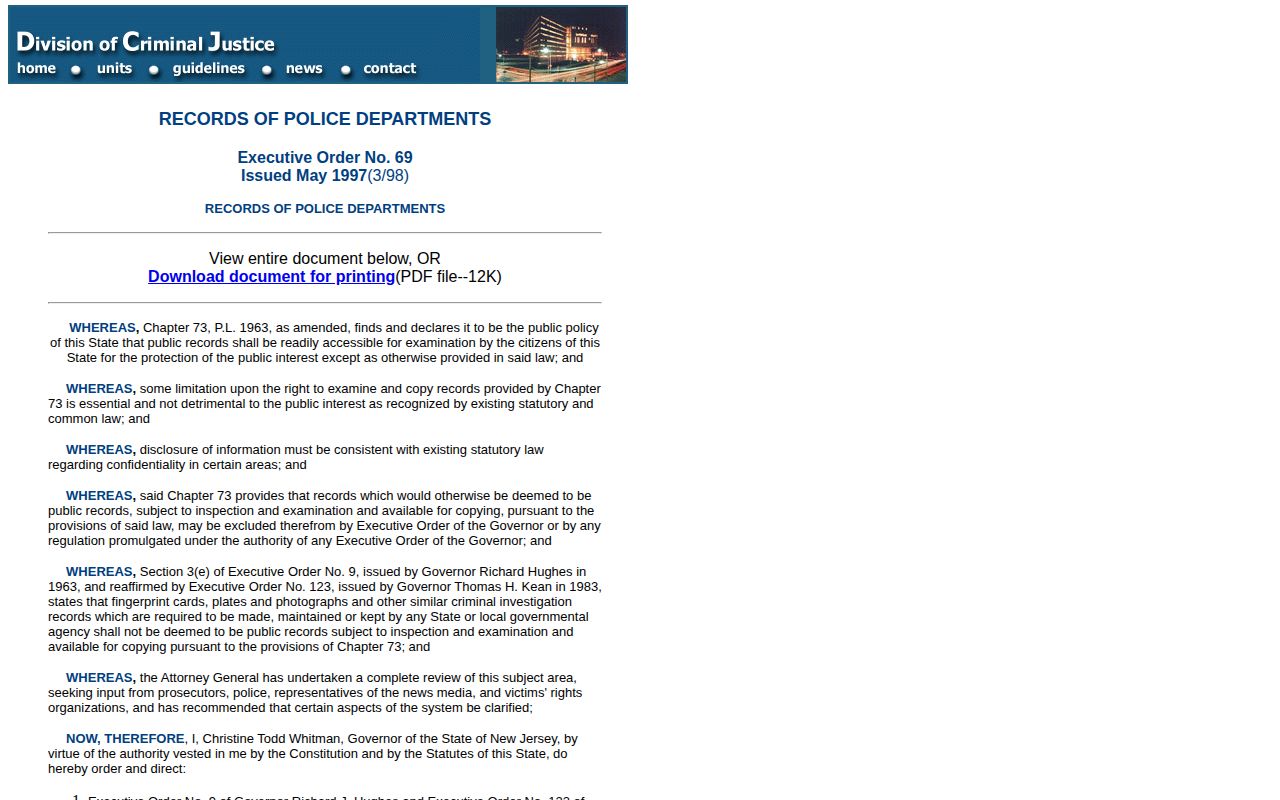
Asking for a booking photo differs from asking for basic arrest information. Executive Order 69 draws that line. It treats fingerprints, plates, photographs, and similar criminal-investigation records as outside OPRA's inspection and copying rules. Basic arrest information stays accessible under the specified exceptions. The order's text is the controlling reference.
SP-275 lists a fee and a closed-case condition for photographs. Neither one makes every image releasable. Withholding can rest on the order itself, an active investigation, or discovery rules. Safety concerns, juvenile confidentiality, victim privacy, sealing, or another legal limit can also justify it. Read any denial on its stated basis. If the request went to the wrong office, redirect it. Send it to the correct custodian.
New Jersey's OPRA definition and its exceptions work together here. The state OPRA text builds the general access framework. Executive Order 69 covers certain criminal-investigation materials. A press release may carry an agency image. A county roster may show a photo under its own process. Neither example creates a statewide right to an NJSP booking photo.
OPRA does force agencies to release basic arrest information. The timing is generally as soon as practicable, and within 24 hours in the circumstances the statute lists. That rule covers specified arrest facts only, still subject to statutory and safety limits. It does not convert a fingerprint or photograph into a public copy. The same goes for any other protected investigative record. When an agency denies or redacts a request, the reason given matters. So does the kind of record sought.
Note: A listed copy fee does not override a lawful photo restriction or a case-specific withholding ground.
Traffic Totals Are Not Arrest Rosters
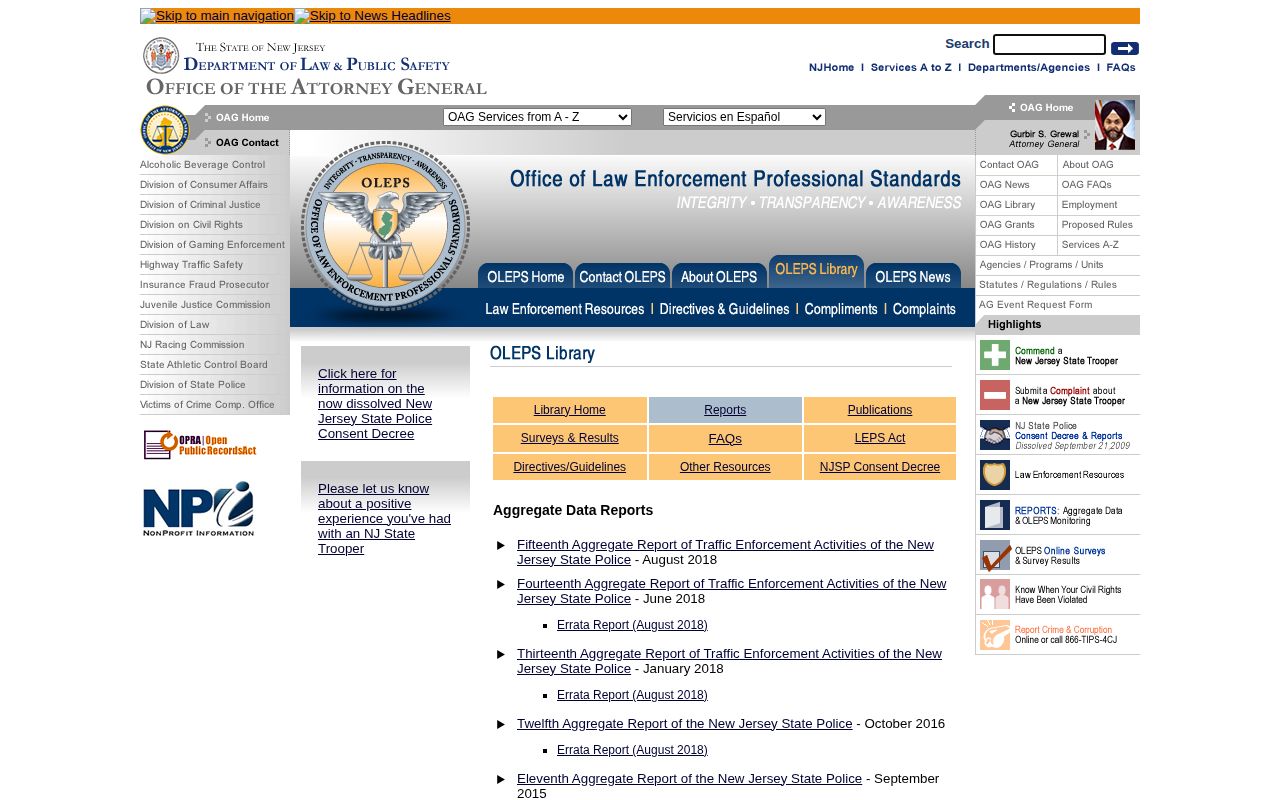
New Jersey's aggregate traffic-enforcement reports give context on highway-safety activity. They are not a list of people arrested. They tally historic totals across a program or across participating agencies. Names are absent. So are booking dates, current custody, and individual case results. A statewide campaign report may even count more than NJSP activity alone. The official aggregate-data page shows the gap between enforcement totals and person-level booking information. It is a data source, not an arrest feed.
When an official release reports an arrest, turn to the county handoff for current custody. A proper report request covers the underlying record. Question about how a case ended? Check the court record or ask the responsible court directly. A press release, a jail roster, and a court disposition are distinct records. Each is built for a different purpose.
Campaign figures add another wrinkle: they often blend multiple agencies and time periods. A published statewide total describes enforcement activity well. It cannot be split into individual NJSP arrests without a source reporting that exact breakdown. Keep the unit of measure, the reporting period, and the covered agencies attached. Every figure needs those labels. A person-level question needs a named agency record. A booking entry from the receiving county works too.