
New Jersey Arrest Reports Form a Patchwork
New Jersey has no single public arrest log. Nothing ties counties, towns, and state agencies together. What exists is a patchwork. One entry might be a municipal police blotter. Another might be a dated report or a prosecutor's news release. Another might be a summary of an enforcement campaign. None of these matches a jail roster. Some describe incidents, some name a person arrested, and some report only campaign totals.
The official examples show how mixed the picture is. Hoboken posts a police blotter. Hackensack publishes dated blotter PDFs. Woodbury posts police news. Readington puts out a weekly report. Each belongs to its own publisher and local reach, never to a statewide stream.
State Police (NJSP) and the Office of the Attorney General add selected arrest announcements and operation news. NJSP also keeps historical highway-safety totals. Those sources explain events and enforcement pushes. But they never enumerate every arrest. They never form one rolling multi-day window either. The statewide New Jersey arrest overview separates these news sources from current-custody searches and county booking records.
Where New Jersey Arrest Blotters Appear
Start your search with the agency or municipality that wrote the report. That rule holds across New Jersey. The examples here are solid starting points. Still, none of them promises coverage of every arrest in its town or county.
| Publisher | New Jersey example | What its time span means |
|---|---|---|
| Municipal police | Hoboken Police Blotter | Selected local blotter material. Check each item’s own event and publication dates. |
| Municipal police | Hackensack dated blotter PDF | A dated report, not proof of a continuous online archive. |
| Municipal police | Woodbury Police News | Local police news posts with their own scope and archive depth. |
| State police and prosecutor | NJSP/OLEPS aggregate reports and the OAG news archive | Historical enforcement totals and selected operations or arrest narratives, not a daily person list. |
| Local weekly report | Readington Police weekly report | A weekly publication can span more than one day; it remains specific to its department and issue. |
The Hoboken Police Blotter is one official municipal example. It is a selected police publication, not a county jail roster.
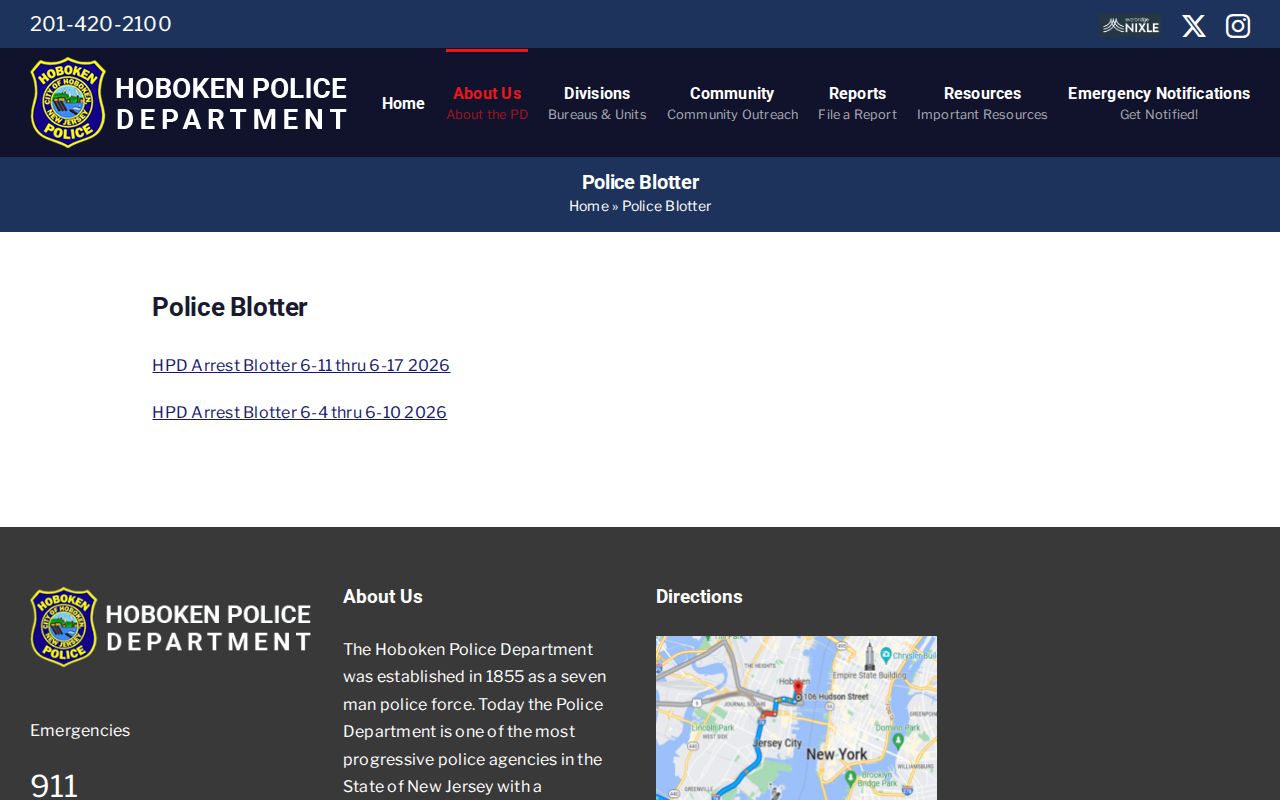
Its scope stays inside Hoboken and whatever the department posts. That single example explains why any New Jersey arrest log should keep the source agency and date attached. Merging separate local reports would blur where each one came from.
These differences matter most when a search comes up empty. An official police feed may cover one town only. A county corrections roster tracks custody instead. Someone arrested inside a municipality can be booked at a county facility, transferred, or released. Blotter and roster need not match fields or stay online equally long.
Note: A dated PDF proves that one report was published; it does not establish how far the department keeps older issues online.
What a New Jersey Arrest-Log Entry Shows
Treat a New Jersey blotter as a source-specific record, not a standard state form. Each police department chooses its own fields. Details may be left out for privacy, an open case, juvenile status, or another legal reason. Also keep the event date apart from the date the item was posted.
| Entry detail | How to read it |
|---|---|
| Publishing agency or town | Shows whose report or news item is being read and the local area it covers. |
| Event, arrest, or incident date | Use the source’s own label. It may not be the date a booking record was made. |
| Post or issue date | Shows when a newsroom or agency made the item public; it can follow the event. |
| Name, charge, or narrative | May appear in a police blotter or arrest story, but fields and detail vary by publisher. |
| Photo or custody status | Not a standard field in the statewide blotter landscape. Check the official jail or agency source. |
| Court outcome | Often absent from a short blotter entry. A later court record is needed to learn the case disposition. |
A blotter label is not the same as "currently in jail." The person may have been released after booking, served with a summons, or moved elsewhere. A blotter can stay public long after the custody roster drops a name. A roster can also list someone without any narrative of the arrest. The two records answer different questions.
Note: Preserve the publisher and post date when saving a reference; later corrections or court outcomes may not appear in an old copy.
New Jersey State Arrest News Is Selected
NJSP leans on news releases. It also uses campaign reports for selected events. The Attorney General's Office does the same with operations and arrest narratives. Neither is a searchable daily dispatch. Neither is a booking log for every State Police arrest. When a release names a county jail, treat that as one custody lead. It is not a complete county record.
Campaign counts help with enforcement trends. They rarely name people or say who remains in custody. Reports can also combine several participating agencies. A statewide total should not be pinned on NJSP alone unless the report says so. The NJSP/OLEPS aggregate-data page presents enforcement totals, not a person-by-person arrest roster.
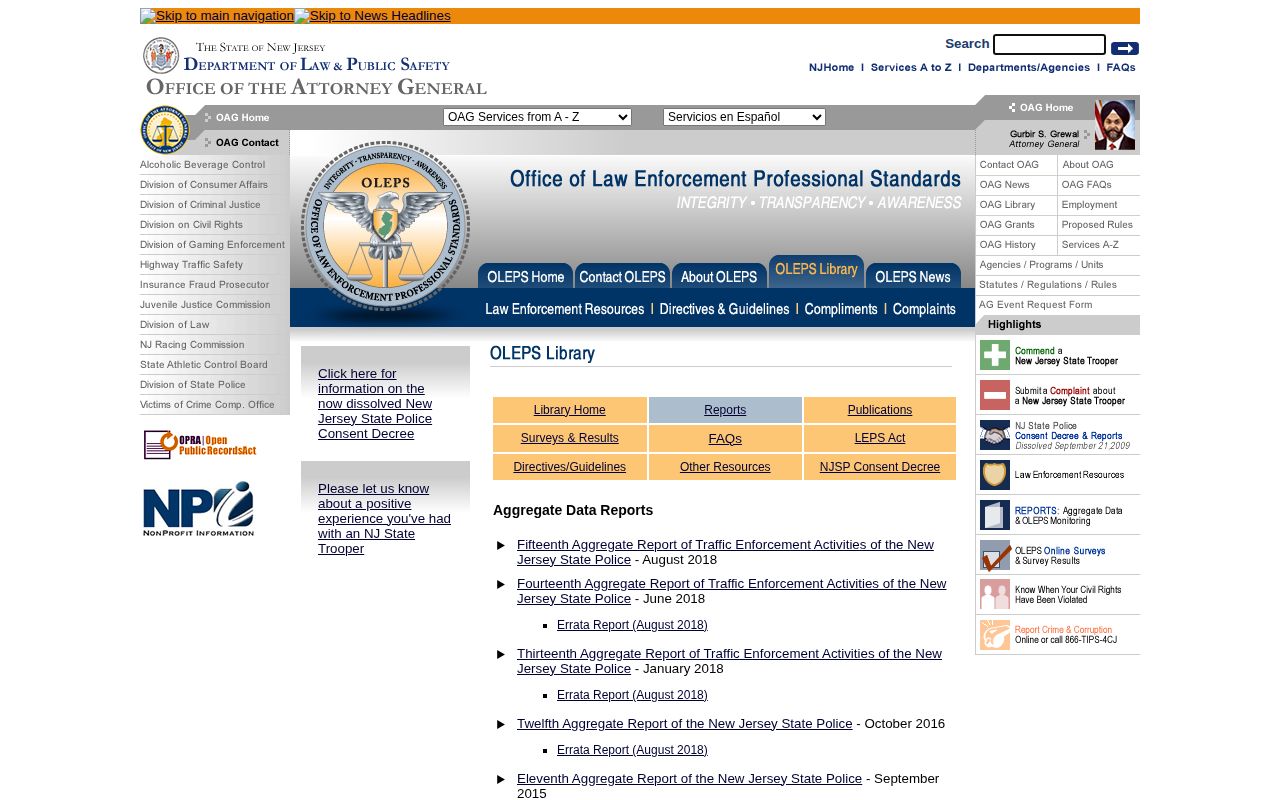
Read totals with the source's own period and agency scope in mind. A high campaign count never identifies a named arrest. A low count never proves a county had no arrests either.
Note: Aggregate enforcement counts describe activity across a stated period, not individual cases or current custody.
How to Read a New Jersey Police Blotter
A careful New Jersey search keeps each source's local role and date range intact. Blending them distorts the picture. These steps work across municipal formats without assuming any shared statewide field set.
- Start with the town, agency, or county named in the event. Identify whether the document comes from police, a prosecutor, NJSP, or a news outlet.
- Open the publisher’s dated archive or current blotter. Record the issue date and the event date separately when both appear.
- Read each entry in context. A charge is an charge, and an arrest narrative does not report the final court disposition unless it says so.
- If the question is current custody, check the receiving jail’s official roster or call the corrections office. A multi-day blotter is not a live custody check.
- If the online window ends, ask the records custodian for the narrow report, date range, and agency record needed. For older public material, check the state archive catalog as well.
For a tighter window, try the statewide Arrests Last 24 Hours routing. It separates date logs from current-inmate searches and flags the counties that publish no daily list.
Weekend and Holiday Arrest Coverage in New Jersey
Weekends and holidays widen the gap between an event and its posted blotter entry. Each publisher follows its own release rhythm. Campaign activity can add extra State Police and prosecutor announcements too. Neither pattern shows that every weekend booking was published. More press releases do not equal more arrests.
Municipal pages can publish individual incidents, weekly summaries, or selected news items. The statewide sample does not establish a shared holiday schedule or a universal 72-hour window. If the exact arrest date matters, use the agency record rather than estimating from when a story appeared online.
New Jersey News and Secondary Arrest Indexes
News coverage can keep a New Jersey arrest story alive long after a roster entry disappears. NJ.com reports on local arrests and prosecutor announcements. TAPinto carries municipal police coverage. Patch runs local editions across the state. None of these outlets is an official case file, though. An accurate article can still sit online after an arrest has been resolved or dismissed, and a correction request works differently than a court record change. Start with official police and prosecutor material. When that is missing, secondary indexes can suggest a county or a date. Be careful all the same. They may copy, omit, duplicate, or misattribute a record. The RecentlyBooked New Jersey index presents its own stated date range and county selection; the publisher advertises a 30-day window refreshed several times a day across selected counties.
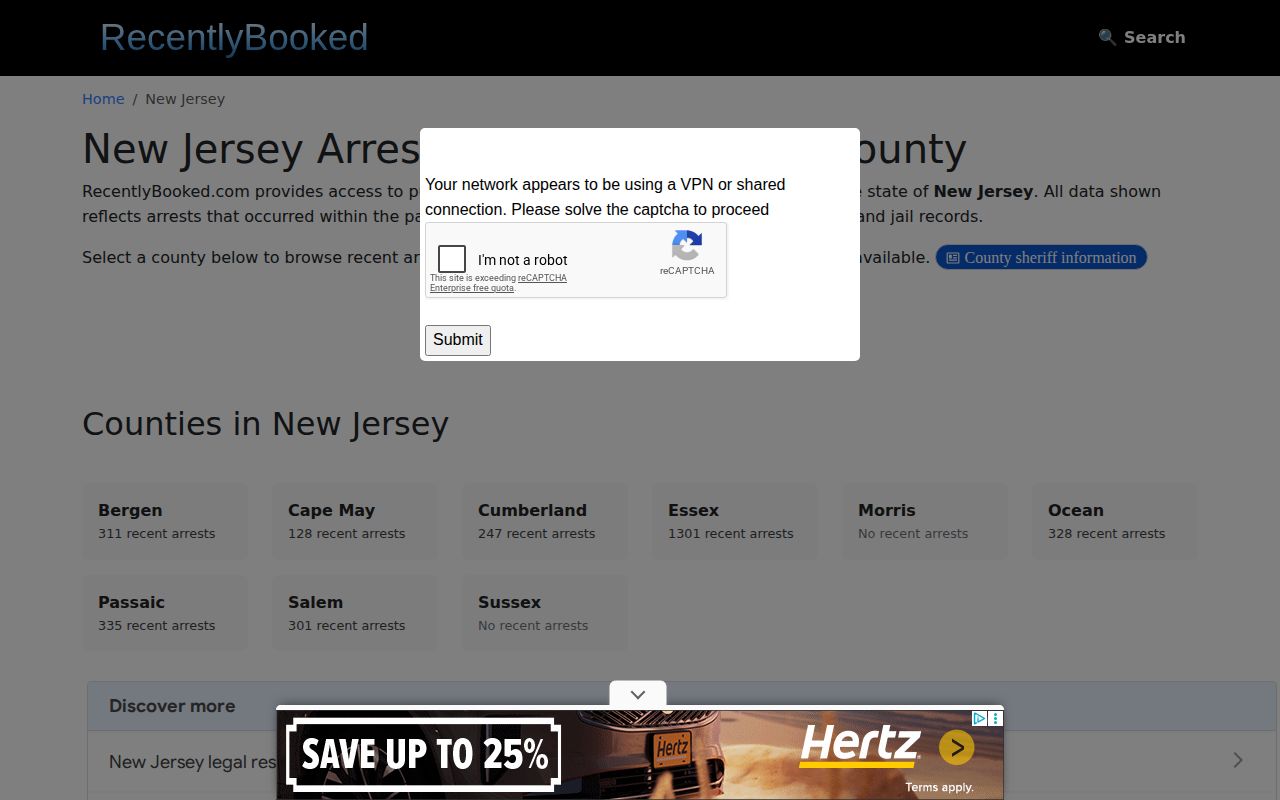
That refresh promise is publisher language, not a government posting schedule. Confirm any match with the arresting agency or court. The Mugshots.com’s New Jersey index arranges pages by county and can retain older items that a current-custody portal drops.
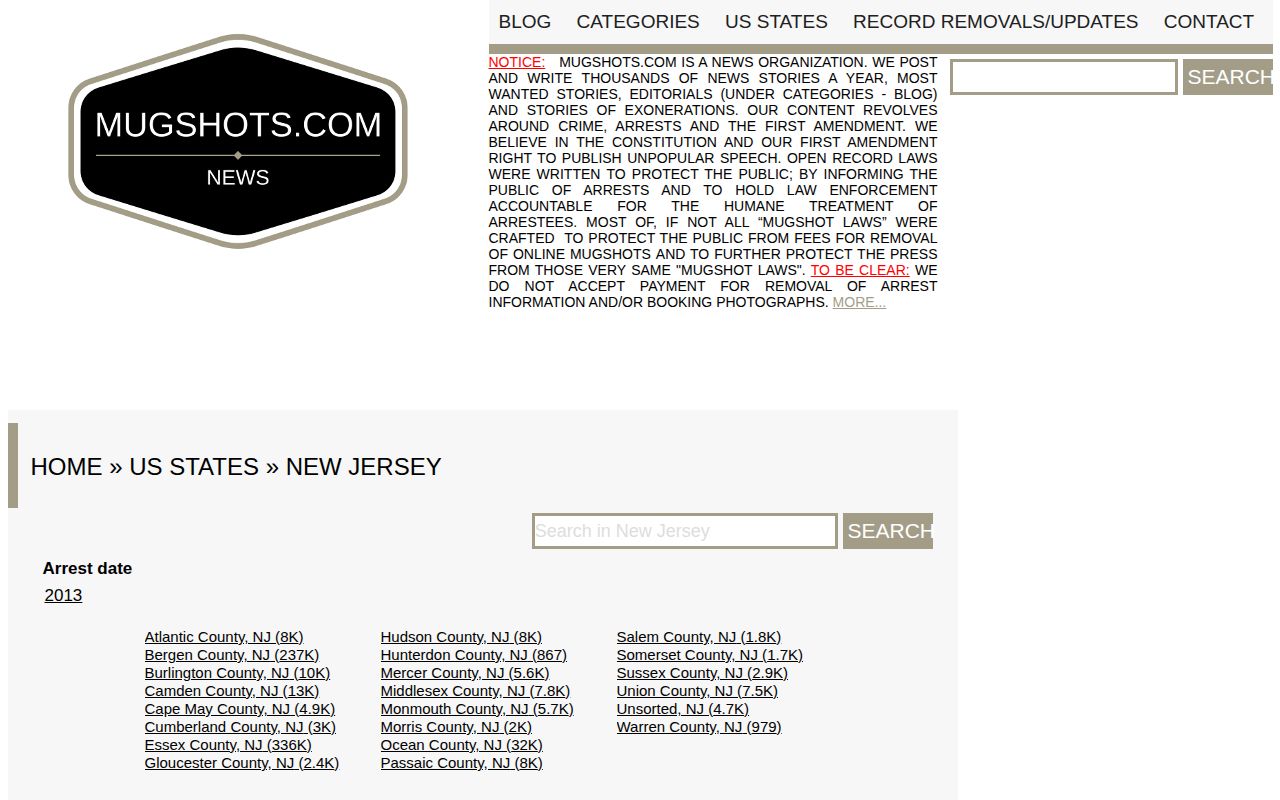
This is an unofficial archive, not a roster. Filters prove little. The date filters and county categories on Mugshots.zone’s New Jersey sections cannot vouch that listed material is complete, current, or correct; the site includes several county pages plus monthly archive presentations.
That apparent depth is a publisher’s archiving habit. It is not the retention schedule for a New Jersey police or corrections record, and the refresh language is likewise a publisher claim rather than an official posting schedule.
Older New Jersey Arrest Logs and Records
A web page can vanish while the government record behind it still legally exists. The reverse happens too. New Jersey sets retention rules through Treasury. Its retention schedules include a county detention center and jail schedule. That schedule splits records into series. A daily blotter or inmate-movement working record carries a three-year minimum. Photo-card and inmate-history identification files run longer. The clock starts at disposition or release, commonly ten years in the cited series. The jail commitment register is permanent.
There is no single blanket period for every arrest document. Admission, booking, court-slip, custody, bail, transport, discharge, and incident records each appear. Each type gets its own schedule entry. A minimum retention period is a records-management rule, nothing more. It never promises that a public blotter or booking photo stays online for that span.
For older material, try the New Jersey State Archives catalog and its finding aids. The Archives hold records, images, and other evidence of government work. No statewide digitized collection of modern county booking photos appears there. Practice varies by county. An older local record may instead sit with the agency or the county clerk.
Say an online log has rolled off. Identify the agency, date span, and report or series as tightly as you can. Then file a public-record request. Ask for inspection or a copy. Include an incident or booking number if you have one. For a historical record, check the Archives first. Then contact the county custodian. Keep the source date and any court disposition with the old arrest entry.
Note: Retention schedules set minimum government record periods; they do not require agencies to preserve a public-facing web page for the same span.